


NEW YORK , Strax Networks, the pioneer in object-aware augmented reality technology, has redefined the concept of the "digital twin" for 2026, moving beyond static 3D models toward a dynamic, invisible infrastructure layer. By implementing what the company calls Intelligent Revenue Infrastructure, property owners are now transforming physical environments into measurable digital channels without the burden of new hardware, sensors, ugly QR codes, physical markers, or expensive manual scanning.
The traditional digital twin, a labor-intensive 3D replica of a building, is quickly becoming a relic of the early 2020s. In its place, Strax Networks provides an infrastructure layer that prioritizes interaction over aesthetics. This shift allows hospitality leaders, museum curators, and retail giants to turn any physical object into a portal for commerce, storytelling, and data collection.
"We aren't just creating digital copies of rooms; we are building the nervous system for physical commerce," says Eric, CEO of Strax Networks. "In 2026, your property doesn’t need more cameras or expensive LiDAR scans. It needs a brain that recognizes what a guest is looking at and triggers a revenue-generating event in real-time. That is the essence of Intelligent Revenue Infrastructure."
The Evolution of the Digital Twin
For years, the promise of the digital twin was tied to "looking" like the real thing. Property managers spent thousands on specialized cameras to create dollhouse views that guests rarely used. Strax Networks has flipped the script by focusing on object recognition AR.
Instead of a digital twin you look at on a laptop, Strax creates a digital twin that lives on top of the physical space. Using Strax’s patented AR recognition technology, a hotel lobby, a gallery wall, or a retail display becomes a "living channel." Guests don’t scan QR codes—there are no ugly markers to install or maintain. They simply point and recognize: when a guest points their device at a physical asset, the infrastructure layer recognizes the object and overlays a contextual, interactive experience.
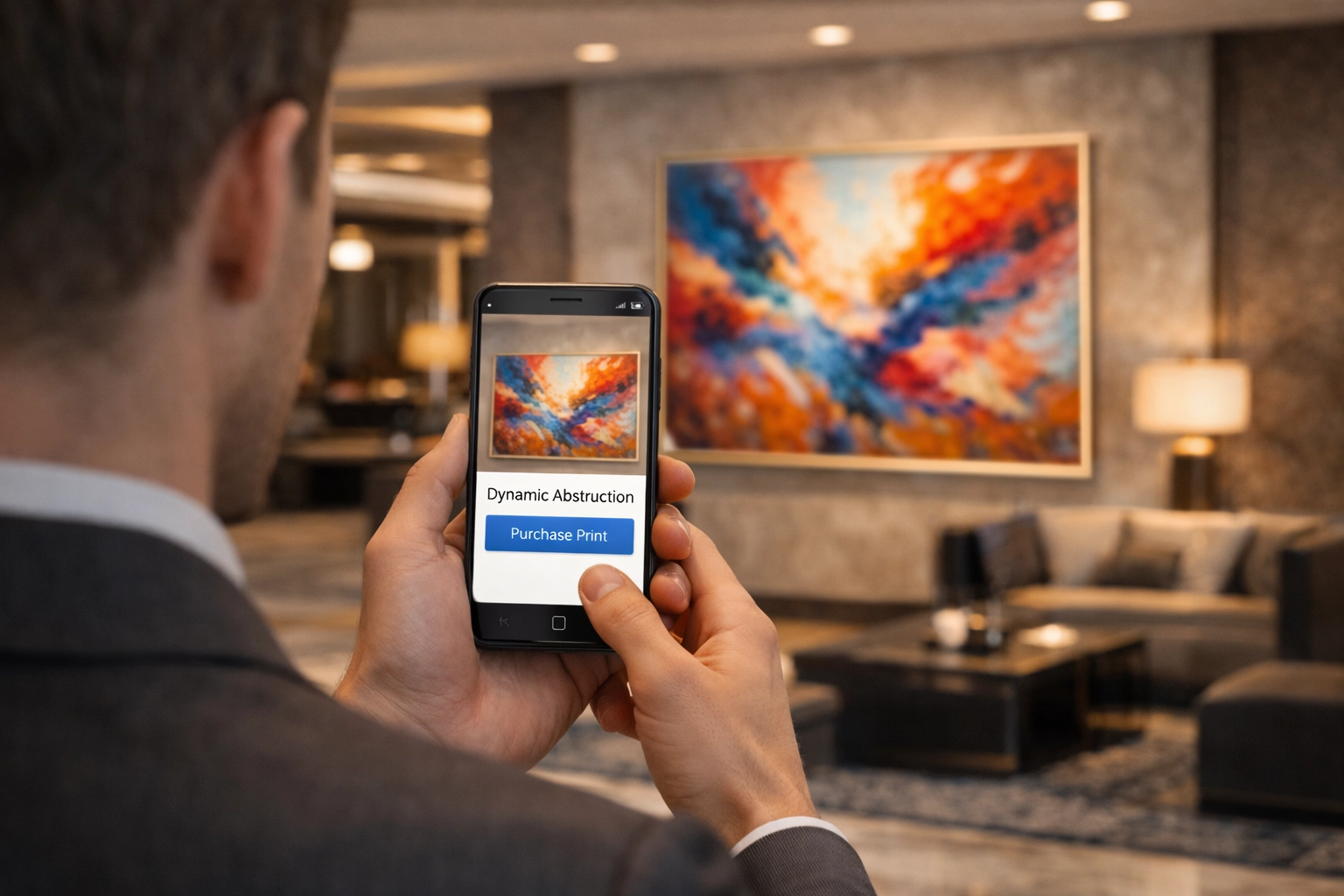 A realistic photo of a sophisticated hotel lobby where a guest is holding a smartphone, pointing it toward a piece of wall art. On the phone screen, a vibrant, sleek AR overlay shows a "Purchase Print" button and a brief history of the artist, blending seamlessly with the high-end physical environment.
Why Hybrid Human-in-the-Loop AI is the New Gold Standard
The rise of agentic AI human in the loop systems has changed the way enterprises deploy technology. Pure AI can be unpredictable; it can hallucinate details or misidentify brand assets, which is a non-starter for high-end properties.
Strax Networks utilizes a hybrid human-in-the-loop approach to ensure absolute precision. This model combines the speed and scale of agentic AI with the editorial oversight of human experts.
"The magic happens in the hybrid human-in-the-loop model," Eric explains. "It ensures that the AI doesn't hallucinate your brand’s reputation away. Our AI identifies the objects and suggests the interactions, but the brand maintains the ultimate 'human' kill-switch for quality and tone. It’s the only way to deploy enterprise augmented reality at scale while maintaining 100% brand safety."
This approach allows for:
- Precision Targeting: Ensuring the AR content perfectly aligns with the physical object.
- Brand Integrity: Human oversight prevents the AI from generating off-brand or incorrect informational overlays.
- Rapid Deployment: The AI does the heavy lifting of recognition, while the human-in-the-loop ensures the "revenue" part of the infrastructure is optimized.
Transforming Spaces into Measurable Digital Channels
The core value of Intelligent Revenue Infrastructure is its ability to turn "dead air" into "data-rich" air. Traditionally, a hotel has no way of knowing how many people looked at the expensive sculpture in the foyer or the promotional poster in the elevator.
By using Strax Networks as an infrastructure layer, those objects become measurable. Every point-and-recognize moment is a data point. Every interaction is a conversion opportunity.
"Every object in your property is a potential broadcast channel," says Eric. "If a guest is curious about the wine they’re drinking at your bar, they shouldn't have to Google it. They should be able to point their phone at the bottle for object recognition and buy a case for home immediately—no ugly QR codes, no physical markers. That is how we transform guest curiosity into measurable engagement and direct commerce."
Industry Applications: Where Revenue Meets Reality
The beauty of an infrastructure layer that requires no new hardware is its versatility. Because Strax works with existing physical assets, the ROI is realized almost instantly across various verticals.
- AR for Hospitality: Hotels are using Strax to replace clunky "compendium" binders. Guests point a device at the coffee machine for object recognition to trigger a video tutorial; they point at the view from the balcony and the system recognizes what they’re looking at to surface a booking link for relevant tours—without QR codes or physical markers.
- Museums and Cultural Sites: Transforming static plaques into dynamic, multi-language guides. Hybrid human-in-the-loop AI ensures historical accuracy while providing an immersive, agentic experience for visitors.
- Enterprise Retail: Turning storefront windows into 24/7 digital storefronts. Even when the doors are locked, the physical display acts as a digital channel for immediate mobile checkout.
- Real Estate Development: Using object recognition AR to show prospective tenants the "future" of an empty space by recognizing floor plans or architectural markers.
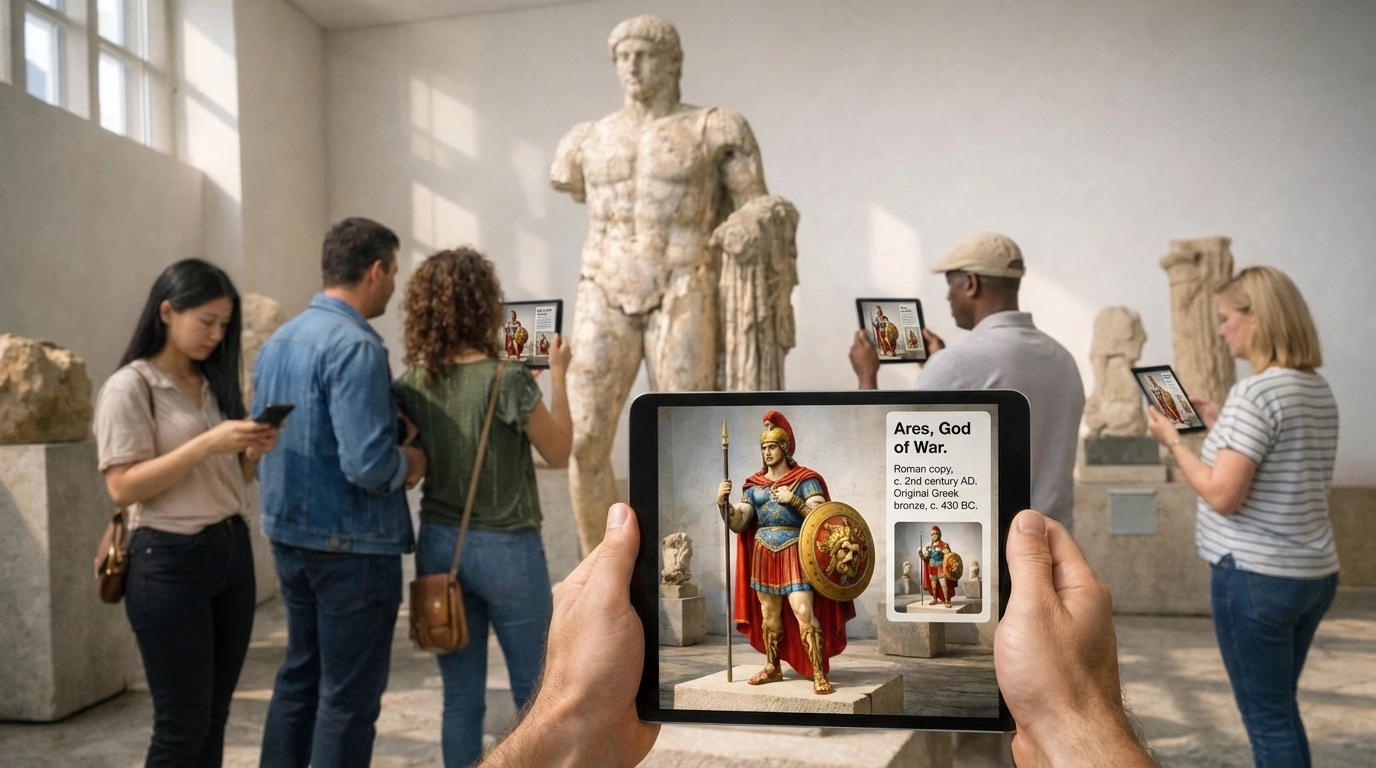 A realistic, wide-angle shot of a modern, sun-lit museum gallery. Visitors are interacting with ancient sculptures using their tablets. The tablets show high-definition 3D reconstructions of how the statues originally looked, with informative text sidebars. No bulky VR headsets are visible, just elegant, everyday devices.
How It Works: The Path to Intelligent Infrastructure
Implementing a digital twin shouldn't take months. With Strax Networks, the process is streamlined to prioritize speed-to-revenue.
- Identification: Assets are identified within the property (art, furniture, signage, etc.).
- Mapping: Strax’s patented recognition engine "learns" these objects without the need for QR codes, ugly stickers, or physical markers.
- Hybrid Human-in-the-Loop Refinement: The AI prepares the recognition triggers, and human curators verify the accuracy and content quality.
- Activation: The infrastructure layer goes live. Guests point their devices, and the physical space is instantly augmented with a digital channel.
- Data Capture: Property managers receive real-time analytics on what guests are interacting with, allowing for data-driven decisions on furniture placement, art rotation, and promotional offers.
The Zero-Hardware Advantage
In the past, the barrier to entry for enterprise augmented reality was the "hardware tax." Property owners were wary of installing sensors, beacons, or specialized screens that would inevitably become obsolete in two years.
Strax Networks removes this barrier. By leveraging the powerful cameras and processors already in the pockets of every guest, Strax turns the existing environment into the interface. This ensures that the aesthetic of a historic hotel or a sleek modern gallery remains untouched. No wires, no plastic sensors, just pure, invisible infrastructure.
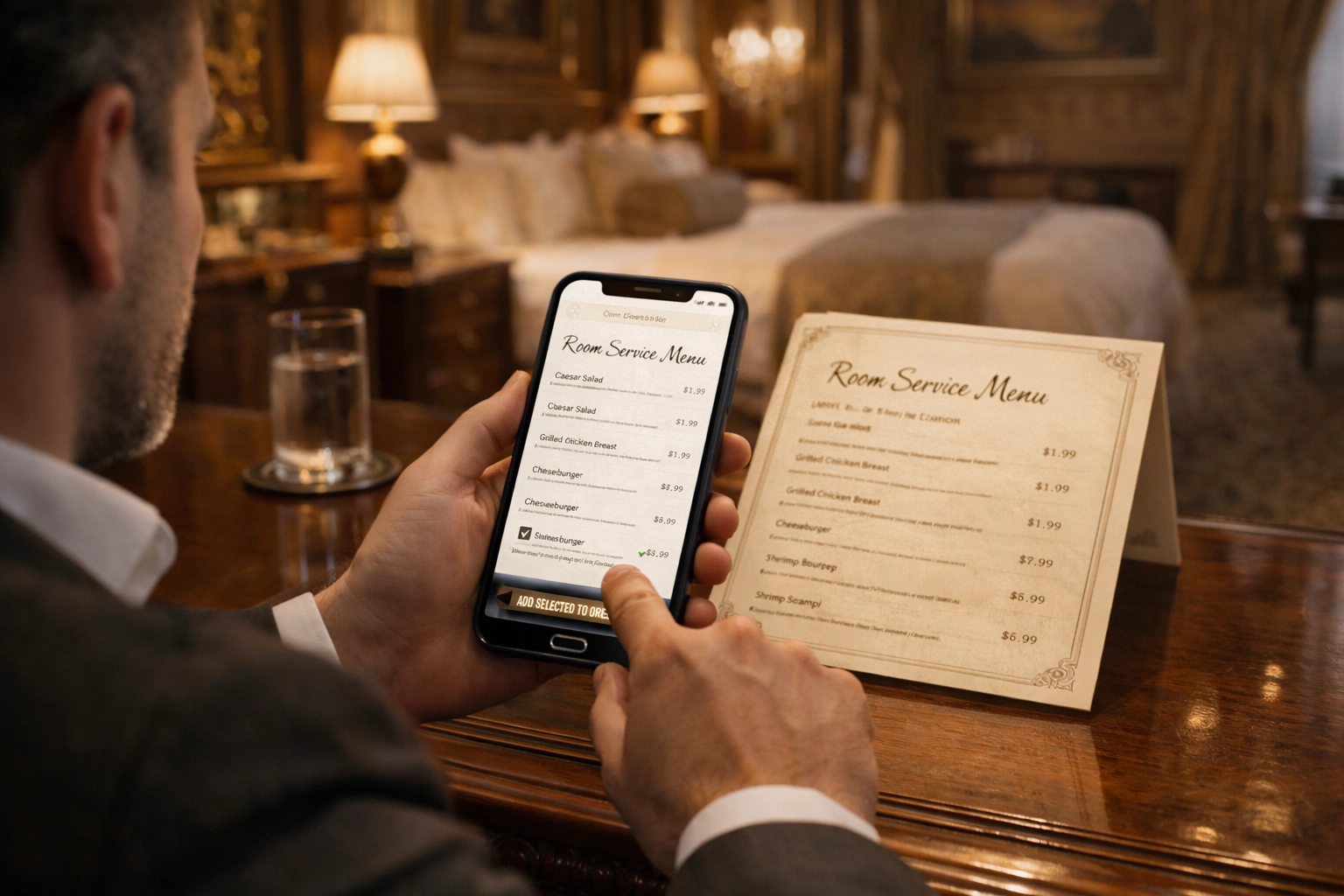 A realistic photo of a luxury historic hotel room. The room is classic and elegant with no visible tech gadgets. A guest is seen in the reflection of a mirror, using a phone to scan a vintage-style room service menu. The phone screen shows a sleek, modern ordering interface with photos of gourmet food.
The Bottom Line for 2026
Does your property need a digital twin? If you mean a static 3D model that sits on a hard drive, the answer is likely no. But if you mean an Intelligent Revenue Infrastructure that allows you to track, engage, and monetize every square inch of your physical space, the answer is a resounding yes.
As we move further into 2026, the gap between the digital and physical worlds will continue to close. Properties that treat their physical assets as static objects will struggle to compete with those that view their environment as a dynamic, living digital channel.
"We are giving properties a voice," Eric concludes. "And more importantly, we’re giving them a way to listen to what their guests want. That’s the future of the industry."
About Strax Networks
Strax Networks is the leader in Intelligent Revenue Infrastructure, providing an advanced AI/AR software layer that transforms physical environments into measurable digital channels. Utilizing patented object recognition AR and a unique hybrid human-in-the-loop AI approach, Strax enables enterprises to deliver immersive experiences without the need for new hardware. Strax Networks currently serves global leaders in:
- Hospitality and Tourism
- Museums and Fine Art
- Enterprise Retail
- Education and Training
By turning physical environments into data-driven assets, Strax Networks helps brands capture guest curiosity and convert it into direct commerce and long-term loyalty.
For more information on how to transform your property, visit straxnetworks.com or explore our latest news.


